
Crack Filling in Southeast Michigan
D&J Contracting fills pavement cracks for commercial properties across Macomb County and Metro Detroit. Prevent water infiltration and extend the life of your asphalt surface.


Licensed & Insured

Local Michigan Crews

38+ Years Experience
Why Commercial Properties Cannot Afford to Ignore Cracks
Every crack in your asphalt is an open invitation for water. In Southeast Michigan, that water freezes in winter, expands, and breaks the pavement apart from below. What starts as a thin crack becomes a pothole. What starts as a pothole becomes a base failure that requires full-depth repair at several times the cost.
Commercial crack filling is the most cost-effective maintenance you can do. Sealing cracks early keeps water out, slows oxidation, and extends the life of your pavement. It also reduces liability - cracks and uneven surfaces create trip and vehicle damage hazards on commercial properties.
What We Seal
Parking lots, service drives, access lanes, loading dock approaches, fire access routes, and any asphalt surface on commercial properties throughout Macomb County and Southeast Michigan.
Types of Cracks and How We Treat Them
Not all cracks respond to the same treatment. We assess crack type and condition before recommending a scope of work.
| Crack Type | Description | Treatment |
|---|---|---|
| Hairline Cracks | Less than 1/4" wide, early oxidation or thermal movement | Hot-pour rubber sealant |
| Linear Cracks | 1/4" to 1" wide, often from thermal cycling | Routing and hot-pour sealing |
| Edge Cracks | Along lot edges or curb lines from lack of support | Filling and edge reinforcement |
| Alligator Cracking | Web-like pattern indicating base failure | Full-depth repair required, not filling |
Our Commercial Crack Filling Process
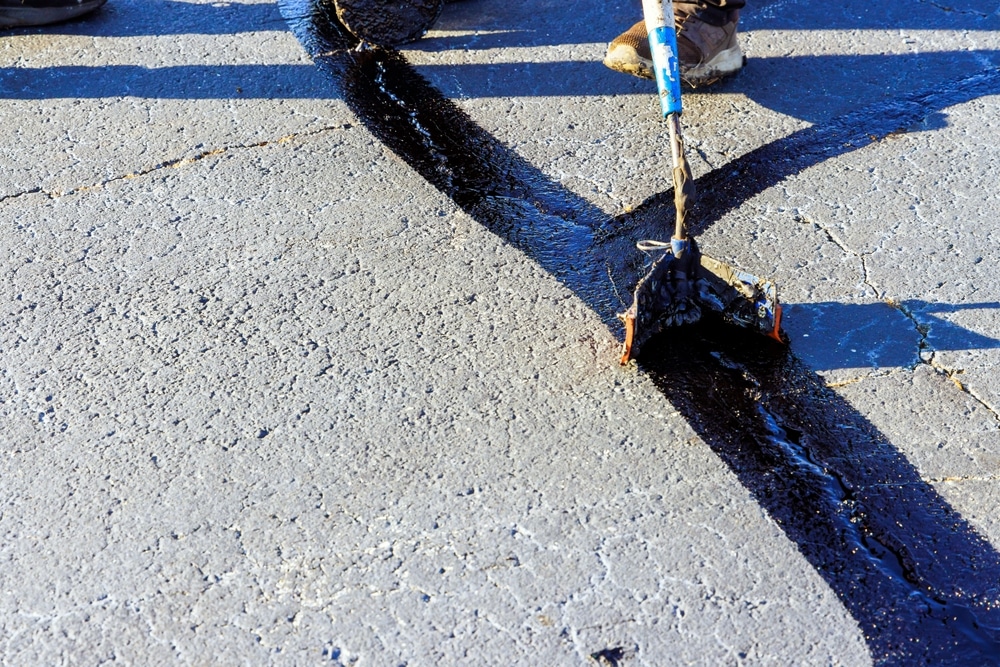
We use hot-pour rubberized asphalt crack filler - the same material standard used on MDOT highway projects. Hot rubber stays flexible through Michigan temperature swings, expanding and contracting with the pavement instead of breaking loose like cold-pour products do.
- Inspection - We walk the lot and assess every crack for type, width, and whether the base below is still sound.
- Cleaning - We use compressed air and wire brushing to remove all debris, moisture, and loose material from crack faces. Bond depends on a clean surface.
- Routing (where needed) - Wider cracks get routed to create a uniform reservoir for better sealant depth and adhesion.
- Hot-Pour Application - We apply heated rubberized sealant to the correct fill level, slightly overfilling to account for initial settling.
- Finishing - We squeegee filled cracks flush with the surface and allow proper cool-down time before the lot is reopened.
We do not fill cracks over base failures. If we find alligator cracking or areas where the base has failed, we call it out and recommend patching or repair rather than covering it up with sealant.
Why Commercial Crack Filling is Worth Every Dollar
Stops Water Infiltration
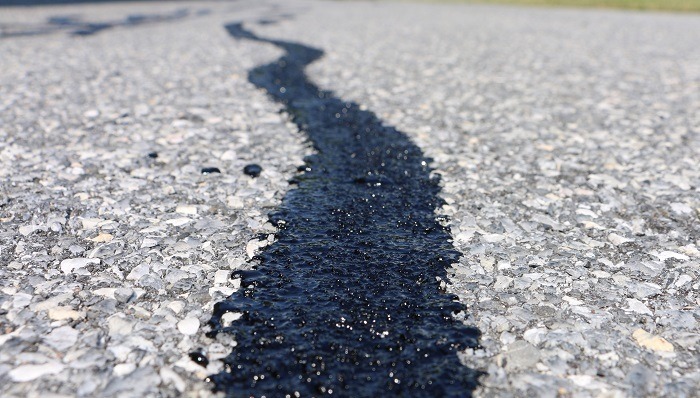
Sealed cracks block the water that causes base erosion, freeze-thaw damage, and pothole formation. This is the primary cause of premature pavement failure in Michigan.
Extends Pavement Life by Years
A proper crack filling program can add 3-5 years to your pavement's service life. Addressing cracks early costs a fraction of the patching and resurfacing work that follows neglected maintenance.
Reduces Liability
Open cracks create trip hazards for pedestrians and can damage vehicle tires and alignments. Sealed surfaces reduce the risk of complaints and claims on your commercial property.
Maximizes Sealcoat Performance
Crack filling before sealcoating produces a more uniform, better-protected surface. Sealcoat applied over open cracks does not bond across the gap and will fail at those points first.
Minimal Disruption
Crack filling is quick work. Most commercial lots can be completed in a single day with the lot reopened the same day once the material has cooled.
Best ROI of Any Pavement Maintenance
Crack filling consistently delivers the highest return on investment of any pavement maintenance service. Every dollar spent on crack filling saves several dollars in repair costs down the road.

David Koback
President

From Our Founders
Accountability on Every Crack Filling Job
"We do not fill cracks over a failed base and call it done. If the base is failing, crack filling is not the fix - and I will tell you that directly rather than take your money for a repair that will not last. Honest calls protect your investment better than empty promises do."

Bradley Sanford
Vice President
Commercial Crack Filling Across Macomb County
D&J Contracting provides commercial asphalt crack filling for properties throughout Southeast Michigan. Our primary service area includes all of Macomb County: Armada Township, Center Line, Chesterfield Township, Clinton Township, Eastpointe, Fraser, Grosse Pointe, Grosse Pointe Farms, Grosse Pointe Park, Grosse Pointe Shores, Grosse Pointe Woods, Harper Woods, Harrison Township, Macomb Township, Madison Heights, Memphis, Mount Clemens, New Baltimore, New Haven, Richmond, Roseville, Shelby Township, St. Clair Shores, Sterling Heights, Utica, Warren, Troy, Rochester, and Rochester Hills.
Call (586) 954-0008 to schedule a crack filling assessment and quote.
Frequently Asked Questions - Commercial Crack Filling
What is the difference between crack filling and crack sealing?
Crack filling is used for non-working cracks that do not move significantly with temperature changes. Crack sealing uses more flexible materials and routing techniques for cracks that expand and contract seasonally. We assess which approach is right for your specific cracks.
When is the best time for crack filling in Michigan?
Spring through early fall when temperatures are consistently above 50 degrees F. Crack filler bonds best to dry, warm pavement. We recommend addressing cracks as soon as conditions allow each spring before freeze-thaw damage from the previous winter spreads further.
Should I seal cracks before sealcoating?
Yes. Always. Sealcoat bridges over cracks but does not seal them structurally. Filling cracks first before sealcoating produces better adhesion, a more uniform surface, and a longer-lasting result for both services.
How long does crack filler last?
Hot-pour rubberized crack filler typically lasts 3-7 years depending on traffic volume, crack movement, and maintenance schedule. Cracks in high-traffic turning areas or near curb edges may need attention sooner.
Can crack filling fix alligator cracking?
No. Alligator cracking indicates base failure - the problem is below the surface, not at it. Crack filling over a failed base will not hold. Those areas require full-depth patching or repair to address the underlying issue.
When can my lot be used after crack filling?
Hot-pour rubber filler cools quickly. Most lots can reopen to vehicle traffic within 30-60 minutes of application, though we recommend 2-4 hours in warm weather to allow full set before heavy truck traffic.
How much does commercial crack filling cost?
Cost depends on the total linear footage of cracks, whether routing is required, and lot accessibility. Commercial lots with moderate cracking can typically be addressed for significantly less than the cost of a single pothole repair. We provide written quotes after a site walk.
How often should a commercial parking lot be crack filled?
As part of a regular pavement maintenance program, crack filling every 2-3 years - often combined with sealcoating - is the standard recommendation. High-traffic lots or lots in poor condition may need more frequent attention.
Need Commercial Crack Filling for Your Parking Lot?
D&J Contracting is Southeast Michigan’s trusted commercial contractor. We respond to estimate requests within one business day and provide written quotes at no cost.
Call (586) 954-0008 or request an estimate online.